
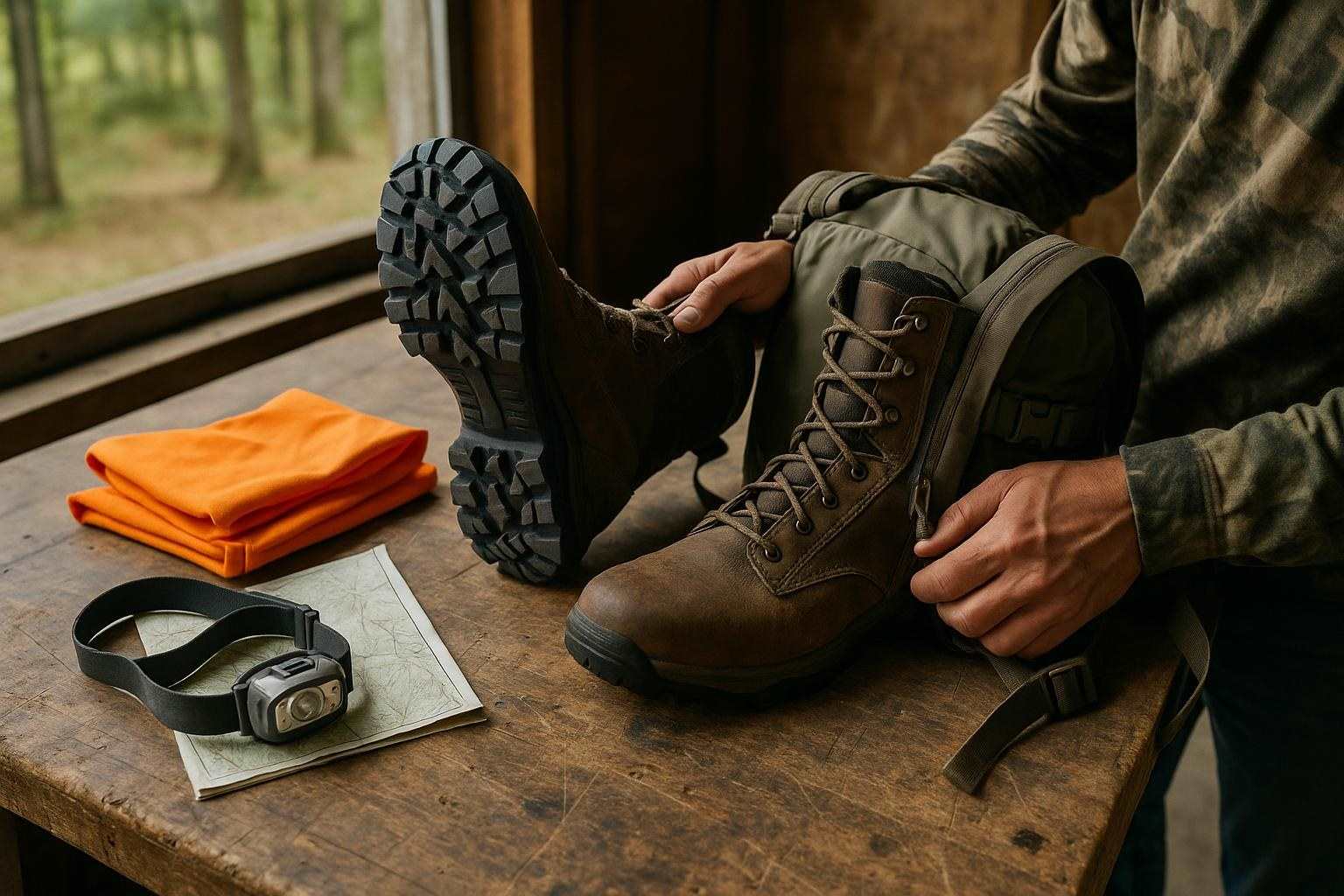
A successful hunting day is rarely saved by one more piece of equipment. More often, it goes well because someone noticed a failing zipper, checked a changed regulation, walked a route in advance, or decided ahead of time what conditions would call for turning back. Pre-season preparation is less about building an impressive gear pile than removing avoidable problems while there is still time to deal with them.
Test the things you normally take for granted
Begin with equipment that spends most of the year in a closet, truck box, garage, or damp basement. Storage can do quiet damage. Look closely at pack straps, boot soles, buckles, zippers, batteries, cords, and metal hardware. A small crack or patch of rust may not seem important on a warm afternoon, but it can become a failure when your hands are cold and the light is fading.
Use the equipment rather than simply looking at it. Open and close the pack several times. Turn on headlamps and flashlights with fresh batteries. Inflate sleeping pads if they will be part of the trip. Pull on rain gear and check whether the fabric still flexes normally or has become brittle, sticky, or cracked. A light that flickers in the basement is already giving you useful information; do not wait for it to fail on the trail.
Apply the same caution to hunting equipment. Follow the manufacturer's maintenance instructions, inspect for damage, and get professional help when a repair or safety question is beyond your knowledge. Do not improvise changes to firearms, bows, or other equipment. Anything that binds, leaks, feels loose, or behaves differently from normal should be taken out of service until the cause is clear.
Let a practice walk expose clothing and boot problems
Boots should be tested on your feet, not judged from a shelf. Wear the socks and base layers you expect to use, then walk on uneven ground for long enough to reveal pressure points. Heel lift, dampness, toe pressure, and hot spots are not minor annoyances on a pre-season walk. They are warnings about blisters, lost warmth, or a shortened day in the field.
Inspect clothing at the same time. Wash or air it according to the care instructions, examine seams, and mend small tears before they become large ones. Try on the layers together so you know what restricts movement and what leaves room for an insulating layer. Check camouflage, blaze clothing, and weather gear against the requirements for the particular hunt. Rules can vary by state, species, season, and location, so last year's setup-and a friend's recollection-may not be enough.
Pack for the conditions that could develop, not only those predicted at departure. Water, food, a dry layer, navigation backup, and a basic first-aid kit generally earn their space more reliably than a specialized accessory that matters only in perfect weather.
Settle access and route details before opening day
A surprising number of difficult hunting days begin with an unresolved question about where to park, which gate to use, or whether permission still applies. Confirm the property boundary, access route, parking arrangement, and the area you are allowed to enter. If permission is verbal, make a private note of who granted it and which dates and areas were discussed. Familiar arrangements can change, even when nobody intended confusion.
Study a current map and plan more than one way out. A trail may be flooded, blocked, occupied by another lawful user, or harder to follow than expected. Mark roads, steep banks, water, private parcels, and other hazards. Give someone outside the hunting party your destination, vehicle information, route, and expected return time.
Permission also comes with a responsibility to leave the property in good condition. Close gates as you found them. Avoid driving across soft ground or placing vehicles and camps near sensitive areas when another location will work. Carry out everything you brought in. Respectful access is not just good manners; it helps protect the possibility of returning.
Verify the rules for the exact hunt
Regulation checks deserve a deliberate review, not a quick look at an old screenshot. Confirm the current season dates, license and tag requirements, legal equipment, shooting hours, tagging and reporting procedures, blaze-clothing rules, bait restrictions, and any provisions that apply only to the specific area or species. Use the relevant state wildlife agency or another current official source, and keep required documents accessible during the hunt.
Then compare the rules with the actual plan. Is the intended location inside the permitted area? Does the proposed access route cross land you cannot use? Can everyone in the group explain what equipment and conduct are legal? If any answer is uncertain, stop and verify it before leaving rather than relying on habit.
Legality is only the minimum standard. A shot can be legal and still be unsafe because of its background, angle, or distance. A legal opportunity can also be a poor ethical choice if identification, visibility, or recovery conditions are inadequate.
Decide when to pass before the moment arrives
Fatigue, worsening weather, and anticipation can make a marginal decision feel more attractive than it did at home. Set boundaries in advance for visibility, animal identification, shooting angle, range, and the conditions required for a reliable recovery. Depending on the situation, the responsible decision may be to wait, pass, leave, or end the hunt entirely.
Recovery planning should be practical. Carry what is needed to track carefully, mark the last known location, and handle an animal lawfully. Do not rush because you are worried about losing time or because you want the result to be different from the evidence. If the shot placement is uncertain, the animal is not clearly identified, or another person could be endangered, hope is not a recovery plan.
The obligation continues after the animal is found. Follow current tagging, reporting, meat-care, transport, and disposal requirements. Take respectful photographs, minimize waste, and treat the animal as something more important than a successful story. Conservation is reflected in the decisions made before the trigger is pulled as well as those made afterward.
Use a short final check instead of buying around problems
A final checklist is worthwhile when it catches omissions. Before setting out, confirm:
– Current licenses, permits, tags, and regulation details
– Permission, boundaries, parking, and a backup route
– Weather-appropriate layers, water, food, and first-aid supplies
– Working navigation, communication, and lighting equipment
– Boots without hot spots, leaks, loose soles, or damaging movement
– Hunting equipment that is safe and serviceable under its instructions
– A clear recovery, tagging, and reporting plan
– A trusted person who knows the route and expected return time
If the list exposes a problem, fix that problem before shopping for another accessory. The most valuable improvement may be a repair, a practice walk, a map review, or a straightforward conversation with the landowner.
Preparation cannot make the woods predictable. It can make a hunter more capable when a strap breaks, fog moves in, access changes, or the only ethical choice is to pass. Those quiet decisions protect personal safety, wildlife, habitat, and the future of Midwest hunting.